Cool Science
  • Home
  • Who We Are
    • History & Mission
    • Staff & Board
  • What We Do
    • Outreach Programs Overview >
      • Demonstration Shows >
        • Demonstration Shows: CO Science Standards
      • Hands-on Programs >
        • Hands-on Labs: CO Science Standards
      • Science or STEM/STEAM Days & Nights, Science Busking
      • Day of Science
      • Mobile Earth & Space Observatory
    • Cool Science Festival (Schedule) >
      • Cool Science Carnival Day
      • Sponsors
      • Join the Festival >
        • Present a Carnival Day Activity
        • Host a Special Event
        • Volunteer Yourself
        • Volunteer Your Group
        • Contact the Festival
      • Previous Festivals >
        • 2025 Cool Science Festival
        • 2025 Cool Science Carnival Day
        • 2024 Cool Science Festival
        • 2024 Cool Science Carnival Day
        • 2023 Cool Science Festival
        • 2023 Cool Science Carnival Day
        • 2022 Cool Science Festival
        • 2022 Cool Science Carnival Day
        • 2021 Festival
        • 2021 Carnival Day
        • 2020 Festival
        • 2020 (Virtual) Carnival Day
        • 2019 Festival
        • 2019 Carnival Day
        • 2018 Festival
        • 2018 Carnival Day
      • CS Cool Science Festival YouTube
    • Big Cool Science Day at Colorado College
    • Kid's Mini Fruitcake Toss
    • Science on Tap
    • Calendar
  • Cool Stuff
    • Try Science At Home
    • Teaching Resources
    • Cool News
    • Cool Science Jokes
  • How To Help
    • Volunteer
    • Donate
    • Corporate & Foundation Donors
  • Contact Us
    • General Contact Info
    • Join Our Mailing List
    • Request A Program

Try Science at Home
​Cool Chemistry

A Fizzy Lava Lamp

6/30/2020

1 Comment


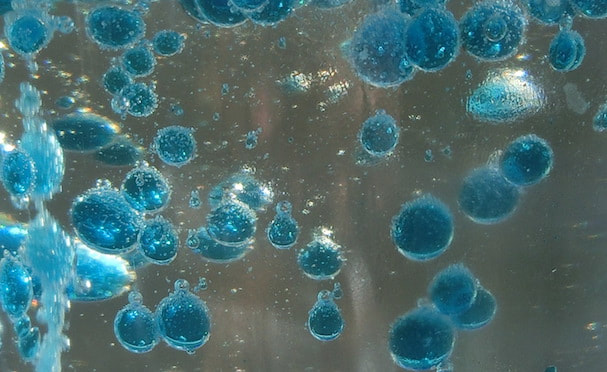
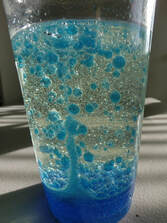
​This bubbly experiment combines principles of chemistry, density and buoyancy to create a colorful Lava Lamp look-alike that may be even more fun than the real thing!
Click and expand the tabs below to get started.
Picture
What you'll need
  • Tall plastic beverage cup or jar
  • Vegetable oil
  • Food colors
  • Alka-Seltzer tablets (or equivalent)
experimental procedure
  1. Fill your cup about 3/4 full with vegetable oil.
  2. Slowly add water to the cup and watch the droplets sink through the oil until there is about a 1" layer of water in the bottom of the cup.
  3. Add a couple of drops of food coloring to the cup.  They should sink through the oil and burst once they reach the water layer.
  4. Break an Alka-Seltzer tablet into 4 or 5 smaller pieces.
  5. Drop one of your Alka-Seltzer pieces into the cup and enjoy the show!  When the bubbles stop, drop another piece.
Picture
what's happening
 You may have heard someone say that water and oil don't mix.  The molecules (the arrangement of atoms that make up these chemicals) that make up water are very different from molecules that make chemicals like vegetable oil.  Water molecules (or H2O) attract other water molecules and oil molecules can (weakly) attract other oil molecules, but water molecules strongly repel oil molecules, kind of like the way magnets repel each other if you point the north pole of one towards the south pole of the other.  Thus when you add oil to water they will separate into different layers, and the oil layer will float to the surface because oil is less dense than water.  This is the scientific term which means that a cup of water has more mass (and is therefore heavier) than the same cup filled with oil.  The force that causes the oil to float above the water layer is called the buoyant force or just buoyancy.  Since the food coloring is dissolved in water, these drops also will not mix with oil and sink to the bottom of your cup where they burst and mix with the water to color it.   

The solid Alka-Seltzer pieces are more dense than the oil or the water, so they sink all the way to the bottom.  As soon as they reach the water they begin to dissolve and a chemical reaction takes place between two of the ingredients that produces carbon dioxide gas bubbles.  As these bubbles rise they pull some of the water along with them and have enough buoyancy to rise through the oil layer, but once they reach the surface the bubbles pop and the gas escapes.  Now the water droplets are too heavy to float, and they fall back through the oil where they may pick up another gas bubble to rise again.

This process resembles the rising and falling bubbles in a Lava Lamp, but it works a little differently.  A real Lava Lamp also contains two immiscible liquids (i.e. they don't mix) with different densities, but it uses the energy from a light bulb underneath to warm the lower liquid.  As it warms it expands and its density decreases, allowing bubbles  to rise up through the upper liquid.  As these bubbles float higher (and farther away from the heat source) they cool down, become denser once again, and fall back into the lower layer where the process can repeat.  The upper liquid also warms during this process, but it was carefully chosen so that its density does not decrease as much, so that it still provides enough buoyant force to push the bubbles from the lower liquid upwards.  See the reference link below for a more detailed explanation.
variations and related activities
  • Instead of a tall cup, you can use a soda bottle for this experiment, then simply screw on the cap to store it between uses.
  • There is another different version of this Lava Lamp which uses salt instead of Alka-Seltzer tablets (see reference link below).  For this variation you first fill your tall glass about 3/4 full of water, then add enough oil to form a layer on top of the water about 1" thick.  Now add a couple spoonfuls of salt which sinks to the bottom of the glass (because it's much more dense than the oil or water), but as it does it drags some of the oil with it.  Now watch as the salt begins to dissolve in the water, releasing the attached oil to float to the surface.  This version is not as colorful (unless you like the yellowish color of the oil), but you can jazz it up it if you have oil-soluble food colors.
  • Another really cool buoyancy experiment is the Dancing Raisins (see reference link below)
references and links to more information
Alternative Lava Lamp experiments:
  • https://sciencebob.com/blobs-in-a-bottle-2/   (Lava Lamp bottle)
  • https://youtu.be/XGgC-S9trD4   (uses salt instead of Alka-Seltzer)

How real Lava Lamps work:
  • https://home.howstuffworks.com/lava-lamp.htm

​More about the differences between and oil and water molecules:
  • https://www.thoughtco.com/why-oil-and-water-dont-mix-609193
  • https://www.thoughtco.com/examples-of-polar-and-nonpolar-molecules-608516
  • https://www.scientificamerican.com/article/mix-it-up-with-oil-and-water/

Try some cool density column experiments:
  • https://www.stevespanglerscience.com/lab/experiments/density-tower-magic-with-science/
  • https://www.stevespanglerscience.com/lab/experiments/oil-and-water/

More about density and buoyancy:
  • https://gosciencegirls.com/density-science-for-kids/
  • https://mocomi.com/buoyancy/
  • https://sciencing.com/teach-buoyancy-grade-school-children-8159938.html
  • https://www.khanacademy.org/science/physics/fluids/buoyant-force-and-archimedes-principle/a/buoyant-force-and-archimedes-principle-article

More cool buoyancy experiments:
  • https://funlearningforkids.com/dancing-raisins-science-experiment-kids/
  • ​https://www.coolscience.org/cool-physics/cartesian-divers  (our Cartesian Divers experiment)

Subject Tags

  • Bubbles
  • Density
  • ​Kitchen Science
  • Oils
  • ​Water

​Return to Main Menu

All Chemistry Subject Tags

All
Acid/Base Chemistry
Bubbles
Crystals
Density
Food Chemistry
Heat/Cold
Kitchen Science
Milk Chemistry
Oils
Phase/State Changes
Polymers
Soap
Water

1 Comment

Colorful Fireworks in a Jar

6/30/2020

0 Comments

 
Picture


​These may not be the explosive rocket type you're accustomed to, but this colorful experiment sure looks cool, and it's a great way to celebrate the 4th of July (or any other day) with a little chemistry and physics!
Click and expand the tabs below to get started.
What you'll need
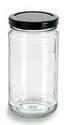
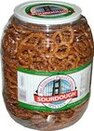
  • Tall plastic beverage cup, jar, or even better​ a large plastic container like those used for pretzels or other snack foods
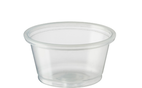
  • Small cups or bowls (single serving pudding or applesauce cups work well)
  • Small spoon
  • Small fork or toothpick
  • Vegetable oil
  • Food colors
Picture
Picture
Picture
Picture
Picture
Picture
experimental procedure
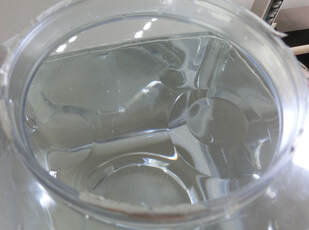
  1. Fill your tall drinking cup or other large container nearly full of cold tap water.
  2. Carefully pour just enough vegetable oil onto the water to create a thin oil "slick" that covers most of the surface of the water.  The oil will form little puddles, but it's not necessary for these puddles to cover the entire surface.  Set it aside for now.​
  3. Pour about 1 teaspoon of vegetable oil into a small cup.
  4. Add 1 drop of food coloring to the oil, then using a toothpick or small fork gently poke at the food color to break it into several smaller droplets.  Don't stir- you don't want to mix it, just break it up a bit.
  5. Using more small cups, repeat Steps 3 and 4 with your other food colors.  [You can put all of your colors into a single cup if necessary, but try not to mix the colors together (unless you want to create a new color) as you break up the droplets.
  6. Very carefully pour the contents of one of your small cups (oil and food color droplets) onto one of the oil slick puddles on the surface of your water container from Step 2.  Try to move as you pour so that the food color droplets are not all in one place.
  7. Repeat Step 6 with any other small cups of oil and color droplets.
  8. Observe what happens as the color droplets sink through the oil layer and into the water below.
Picture
Oil puddles on water surface (Step 2)
Picture
Breaking up color droplets (Step 4)
What's happening
You may have heard someone say that water and oil don't mix.  The molecules (the arrangement of atoms that make up these chemicals) that make up water are very different from molecules that make chemicals like vegetable oil.  Water molecules (or H2O) attract other water molecules and oil molecules can (weakly) attract other oil molecules, but water molecules strongly repel oil molecules, kind of like the way magnets repel each other if you point the north pole of one towards the south pole of the other.  Thus when you add oil to water they will separate into different layers, and the oil layer will float to the surface because oil is less dense than water.  This is the scientific term which means that a cup of water has more mass (and is therefore heavier) than the same cup filled with oil.  The force that causes the oil to float above the water layer is called the buoyant force or just buoyancy.

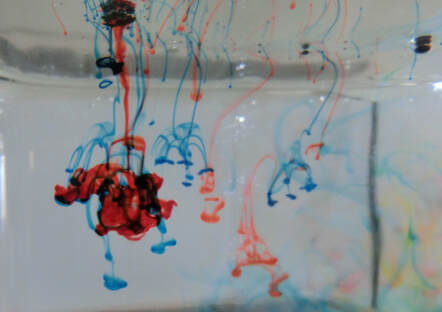
Since the food coloring is dissolved in water, it also will not mix with oil and sinks to the bottom of your cup.  When you gently pour the oil and color droplets from your cup onto the surface of the large container they first mix with the rest of the oil floating on the surface and the color droplets start to sink.  As they reach the bottom of the oil layer they cling there for a few seconds until they can finally break through into the water below.  Once they make it into the water the food color droplets can begin to dissolve, and because they are just slightly more dense that the rest of the water (the food coloring chemicals give it a little more mass) they slowly sink and create the beautiful color streaks that look sort of like fireworks exploding in slow motion!
variations and related activities
What difference does it make if you use hot water instead of cold water?  For a bigger "explosion", try carefully adding a drop of food color directly to the oil puddle on the surface, but don't get too much color in the water or you won't be able to see what's happening.

You can learn more about density and buoyancy by making a density column, where several different (usually colorful) liquids are carefully poured into a tall container where they separate into many layers.  Check out the links below to try this experiment for yourself.

There are several other fun activities and experiments which demonstrate buoyancy, like the Cartesian Diver bottle and Dancing Raisins.  See the links below to have some fun.
references and links to more information
More about the differences between and oil and water molecules:
  1. https://www.thoughtco.com/why-oil-and-water-dont-mix-609193
  2. https://www.thoughtco.com/examples-of-polar-and-nonpolar-molecules-608516
  3. https://www.scientificamerican.com/article/mix-it-up-with-oil-and-water/

Try some cool density column experiments:
  1. https://www.stevespanglerscience.com/lab/experiments/density-tower-magic-with-science/
  2. https://www.stevespanglerscience.com/lab/experiments/oil-and-water/

More about buoyancy:
  1. https://mocomi.com/buoyancy/
  2. https://sciencing.com/teach-buoyancy-grade-school-children-8159938.html
  3. https://www.khanacademy.org/science/physics/fluids/buoyant-force-and-archimedes-principle/a/buoyant-force-and-archimedes-principle-article

Try some cool buoyancy experiments:
  1. https://funlearningforkids.com/dancing-raisins-science-experiment-kids/
  2. http://www.sciencemadesimple.co.uk/activity-blogs/ketchup_diver
  3. https://www.kiwico.com/diy/Science-Projects-for-Kids/3/project/Cartesian-Diver/2649
  4. https://sciencebob.com/make-a-cartesian-diver/
  5. https://www.wikihow.com/Make-a-Spinning-Cartesian-Diver

​

Subject Tags


  • Density
  • Kitchen Science
  • Oils
  • ​Water


Return to Main Menu

All Chemistry Subject Tags

All
Acid/Base Chemistry
Bubbles
Crystals
Density
Food Chemistry
Heat/Cold
Kitchen Science
Milk Chemistry
Oils
Phase/State Changes
Polymers
Soap
Water

0 Comments
Picture
Picture
Picture
Picture
Picture
Picture
  • Home
  • Who We Are
    • History & Mission
    • Staff & Board
  • What We Do
    • Outreach Programs Overview >
      • Demonstration Shows >
        • Demonstration Shows: CO Science Standards
      • Hands-on Programs >
        • Hands-on Labs: CO Science Standards
      • Science or STEM/STEAM Days & Nights, Science Busking
      • Day of Science
      • Mobile Earth & Space Observatory
    • Cool Science Festival (Schedule) >
      • Cool Science Carnival Day
      • Sponsors
      • Join the Festival >
        • Present a Carnival Day Activity
        • Host a Special Event
        • Volunteer Yourself
        • Volunteer Your Group
        • Contact the Festival
      • Previous Festivals >
        • 2025 Cool Science Festival
        • 2025 Cool Science Carnival Day
        • 2024 Cool Science Festival
        • 2024 Cool Science Carnival Day
        • 2023 Cool Science Festival
        • 2023 Cool Science Carnival Day
        • 2022 Cool Science Festival
        • 2022 Cool Science Carnival Day
        • 2021 Festival
        • 2021 Carnival Day
        • 2020 Festival
        • 2020 (Virtual) Carnival Day
        • 2019 Festival
        • 2019 Carnival Day
        • 2018 Festival
        • 2018 Carnival Day
      • CS Cool Science Festival YouTube
    • Big Cool Science Day at Colorado College
    • Kid's Mini Fruitcake Toss
    • Science on Tap
    • Calendar
  • Cool Stuff
    • Try Science At Home
    • Teaching Resources
    • Cool News
    • Cool Science Jokes
  • How To Help
    • Volunteer
    • Donate
    • Corporate & Foundation Donors
  • Contact Us
    • General Contact Info
    • Join Our Mailing List
    • Request A Program